
Why Do Tourist Visas Get Rejected? Common Reasons and How to Avoid Them

Voyaj
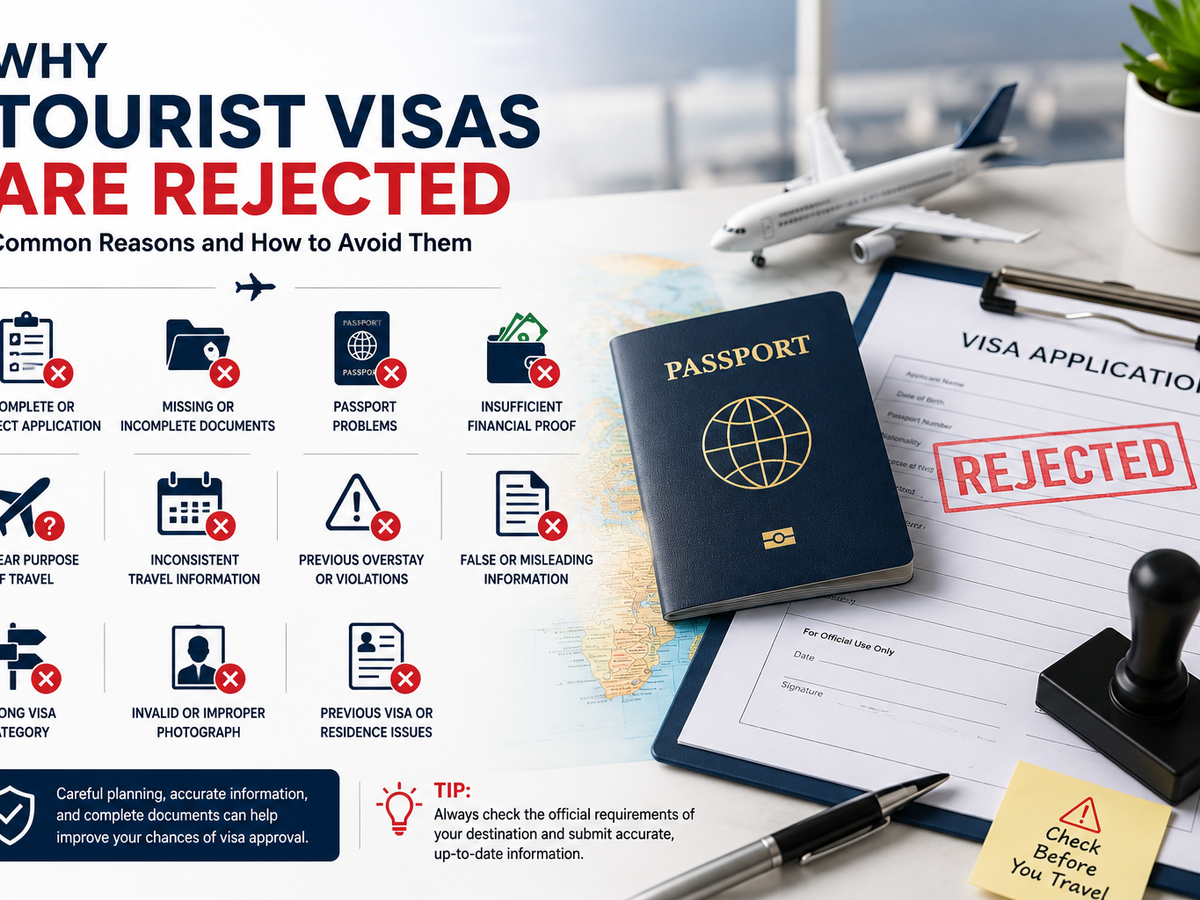
A tourist visa refusal can affect your travel plans, especially if you have already booked your flights and accommodation. But why are tourist visas rejected? Immigration authorities check several things before approving a visa, including your documents, financial situation, reason for travel, and previous travel history.
Sometimes, a visa is refused because of a simple mistake or missing document. In other cases, the application may raise concerns about the traveller or their plans. Knowing the common reasons for visa rejection can help you avoid mistakes and prepare a stronger application.
Let's look at the main reasons why tourist visas are rejected and what you can do to reduce the risk.
1. Incomplete or Incorrect Visa Application
One of the most common reasons for visa rejection is an application that contains missing or incorrect information. Even a small error in your name, date of birth, passport number, travel dates, or other personal details can create inconsistencies during the assessment.
Leaving sections blank, forgetting to sign where required, or submitting information that does not match your passport or supporting documents can also cause problems.
2. Missing or Incomplete Supporting Documents
Visa applications often require supporting documents to establish your identity, financial position, travel plans, and purpose of visit. If important documents are missing, unclear, expired, or not submitted in the required format, the application may be delayed or refused.
Depending on the destination, documents may include a valid passport, photographs, accommodation details, return or onward tickets, financial proof, employment documents, travel insurance, or other supporting evidence.
3. Passport Problems
Your passport is one of the most important documents in any visa application. An expired passport, insufficient remaining validity, damaged passport, or other passport-related issue can affect your application.
Some destinations require the passport to remain valid for a specific period beyond the intended stay. A damaged passport may also raise concerns about its validity or authenticity.
4. Insufficient Financial Proof
Many countries want to see that visitors have enough money to support themselves during their stay. If your bank statements or other financial documents do not demonstrate sufficient funds, the visa officer may question whether you can cover your accommodation, transportation, food, and other expenses.
The issue is not always about having a very large bank balance. Immigration authorities may also consider the consistency of your income, account activity, and whether your financial situation reasonably matches your travel plans.
5. Unclear Purpose of Travel
A visa application should clearly explain why you want to visit the destination. If your stated purpose is tourism but your itinerary or supporting documents suggest something different, immigration authorities may question your application.
For example, unclear accommodation arrangements, unusual travel plans, or inconsistencies between your stated purpose and your documents may create doubts about your intentions.
6. Inconsistent Travel Information
Your visa application, flight details, hotel booking, and travel itinerary should generally be consistent. Differences in dates, names, or destinations can raise questions during the assessment.
For example, if the dates on your hotel booking do not match your stated travel period or the information on your application differs from your flight details, the officer may ask for clarification.
7. Previous Overstay or Immigration Violations
Your previous immigration history can affect future visa applications. Overstaying a previous visa, failing to follow immigration rules, or having unresolved fines or other violations may lead to additional scrutiny or refusal.
For destinations such as the UAE, previous overstay records and unresolved immigration matters can be relevant when assessing a new visa application..
8. Providing False or Misleading Information
Providing incorrect information or submitting fake documents is a serious issue. Immigration authorities may refuse applications if they discover that information has been deliberately misrepresented.
This can include false employment details, altered bank statements, fake hotel bookings, or inaccurate information about your travel history.
9. Wrong Visa Category
Choosing the wrong visa type can also create problems. The visa you apply for should match the actual purpose of your trip. A person travelling for tourism should apply under the appropriate tourist or visit category rather than using a visa intended for another purpose.
Similarly, travellers should select the correct duration and category based on their plans and eligibility.
10. Problems with Your Photograph
Visa applications often have specific photograph requirements. An old, blurry, low-quality, incorrectly sized, or poorly scanned photograph may cause an application to be rejected or returned for correction.
For online applications, the quality of the uploaded image is particularly important.
11. Previous Visa or Residence Status Issues
In some cases, an applicant may have a previous visa that was not properly cancelled or cleared. This can create issues when applying for a new visa.
For example, previous UAE residence or employment visas that remain active or unresolved may need to be cleared before a new tourist visa application can be processed.
12. Unclear or Unusual Travel History
Your previous travel history may form part of the overall assessment of your application. Frequent short visits, previous visa refusals, or travel patterns that appear inconsistent with your stated purpose may lead to additional questions.
This does not automatically mean that an application will be rejected. However, immigration authorities may examine the application more carefully if they need additional clarification.
Does a Visa Rejection Mean You Cannot Apply Again?
Not necessarily. A visa refusal does not always mean that you are permanently unable to travel to that country. In many cases, applicants may be able to submit a new application after addressing the issue that led to the refusal.
However, simply submitting the same application again without understanding what went wrong may result in another refusal. The right approach is to identify the possible problem, correct the relevant documents or information, and then determine whether you are eligible to apply again.
The exact process after a refusal depends on the country, visa category, and reason for the decision.
How to Reduce the Risk of Tourist Visa Rejection
While no one can guarantee visa approval, careful preparation can help you avoid common mistakes and strengthen your application.
Check the Latest Visa Requirements
Visa rules can vary by country and may change over time. Check the latest requirements from the relevant embassy, consulate, or official immigration authority before preparing your application.
Make Sure Your Passport Meets the Validity Requirements
Your passport should meet the required validity period for your destination. Also, make sure it has enough blank pages if required and is not damaged.
Complete the Application Form Accurately
Fill in every required section carefully and ensure that your personal details, passport information, travel dates, and other information are correct and consistent.
Use Clear and Genuine Supporting Documents
Submit original or officially accepted documents that are clear and easy to read. Avoid submitting altered, fake, or outdated documents, as this can seriously affect your application.
Ensure Your Financial Documents Are Consistent
Your bank statements and other financial documents should provide a clear picture of your financial situation. Avoid unexplained transactions or information that conflicts with the details in your application.
Provide a Realistic Travel Itinerary
Your travel plans should be clear and reasonable for the duration of your stay. Include accurate information about your intended destinations and activities where required.
Make Sure Your Hotel and Flight Details Match Your Travel Dates
Check that your flight reservations, accommodation bookings, and visa application show consistent travel dates. Differences between these documents may raise questions about your plans.
Check That Your Photograph Meets the Required Specifications
Visa authorities often have specific requirements for photographs, including size, background, and quality. Submit a recent photograph that follows the exact guidelines for your application.
Resolve Any Previous Immigration or Visa Issues
If you have previously overstayed a visa, violated immigration rules, or have an unresolved visa or residence status, address the issue before applying again where possible.
Be Honest About Your Travel History and Purpose
Always provide truthful information about your previous travel, visa applications, and reason for visiting the destination. False or misleading information can lead to refusal and may affect future visa applications.
It is also important to remember that visa approval is ultimately decided by the relevant immigration authority. Meeting the basic document requirements does not automatically guarantee approval.
What Should You Do If Your Tourist Visa Is Rejected?
If your tourist visa is rejected, avoid immediately submitting another application without reviewing what may have caused the refusal.
Start by checking the refusal notification or available information about the decision. Review your application for incomplete information, document issues, financial concerns, or inconsistencies.
If you are eligible to reapply, correct the relevant issues before submitting a new application. Depending on the destination and type of refusal, you may also need to wait before applying again.
If the reason for rejection is unclear, professional visa assistance may help you understand the documentation and application requirements before you submit a new application.
Final Thoughts
Tourist visa rejection can happen for many reasons, and not every rejection is caused by a major problem. In many cases, incomplete applications, inconsistent information, missing documents, financial concerns, passport issues, or previous immigration records can affect.
The best way to reduce the risk of rejection is to prepare your application carefully, provide genuine documents, and ensure that all information is accurate and consistent. Before applying, always check the latest requirements for your destination, as visa rules and procedures can change.
If you need help planning your international trip, Voyaj, a travel marketplace, connects travellers with services such as visa assistance, flights, hotels, travel insurance, transfers, and other travel essentials. With the right preparation and reliable support, you can make your visa application process more organised and focus on planning the journey ahead.