
Single Entry vs Multiple Entry Visa Explained: Key Differences & Benefits

Voyaj
What You Should Know About Entry Visas
Applying for a visa is one of the most important steps when planning an international trip. While checking the visa requirements for your destination, you may come across terms such as single-entry and multiple-entry visas. If you're travelling abroad for the first time, it can be difficult to understand the difference and decide which one suits your travel plans.
The type of visa you choose affects how many times you can enter a country during the visa's validity period. Selecting the wrong visa may result in additional visa applications, extra costs, or changes to your travel itinerary.
In this guide, we'll explain the differences between single-entry and multiple-entry visas, how they work, their advantages, and when each option is the right choice for your trip.
What Is an Entry Visa?
An entry visa is a travel authorisation that allows you to enter a country. Depending on the visa issued, you may be allowed to enter only once or multiple times during its validity period.
The number of entries permitted is clearly mentioned on the visa. Understanding this condition before travelling helps you avoid unexpected issues during your journey.
What Is a Single Entry Visa?
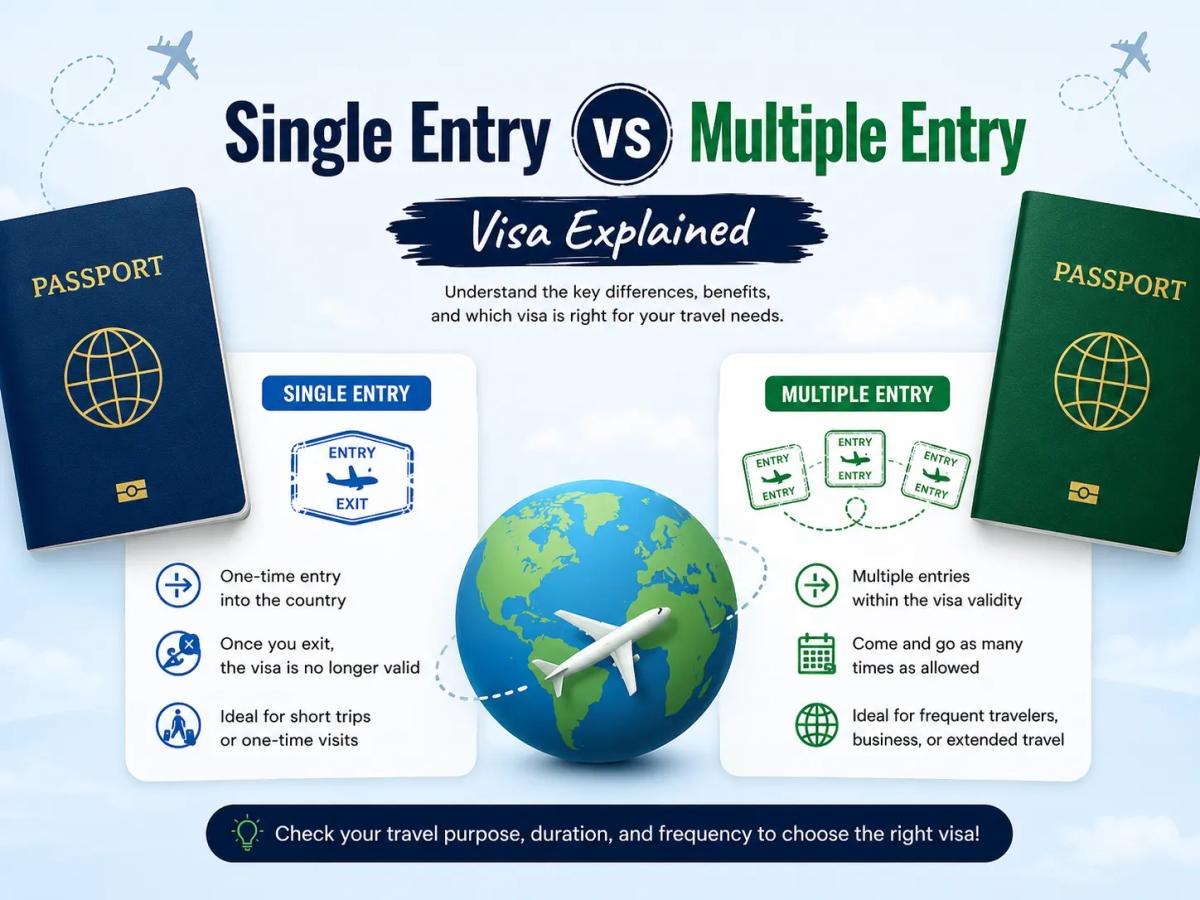
A single-entry visa allows you to enter the destination country only once during its validity period.
Once you leave the country, the visa is considered used—even if it has not yet expired. If you wish to return, you'll usually need to apply for a new visa unless the country's immigration rules state otherwise.
How Does a Single Entry Visa Work?
Imagine you're travelling from the UAE to Japan for a 10-day holiday.
- You enter Japan using your single-entry visa.
- You enjoy your holiday.
- You fly back to the UAE.
Your visa has now been used.
If you decide to visit Japan again next month, you'll generally need to submit a new visa application.
Who Should Choose a Single Entry Visa?
A single-entry visa is suitable for travellers who:
- Are planning one holiday.
- Have a fixed travel itinerary.
- Do not intend to leave and re-enter the same country.
- Are visiting family or friends for one trip.
- Are travelling for a short vacation.
For most leisure travellers, a single-entry visa is often the simplest and most cost-effective option.
Benefits of a Single Entry Visa
A single-entry visa offers several advantages:
Lower Cost
Single-entry visas are generally less expensive than multiple-entry visas, making them a good choice for budget-conscious travellers.
Simple Application
For many destinations, the application process is straightforward, especially if you're travelling only once.
Ideal for Short Trips
If your travel plans include only one visit to the destination, there's usually no need to pay extra for a multiple-entry visa.
Limitations of a Single Entry Visa
Although it's suitable for many travellers, a single-entry visa has a few limitations.
- You cannot re-enter after leaving the country.
- Any change in travel plans may require a new visa.
- It is not suitable for travellers visiting neighbouring countries and returning to the same destination.
For example, if you enter a country and later travel to a neighbouring country before returning, your single-entry visa may no longer be valid for re-entry.
What Is a Multiple Entry Visa?
A multiple-entry visa allows you to enter and leave the destination country several times during the visa's validity period.
Instead of applying for a new visa every time you travel, you can use the same visa for multiple visits, provided you follow the visa conditions and stay limits.
This type of visa is especially useful for frequent travellers.
How Does a Multiple Entry Visa Work?
Suppose you have a one-year multiple-entry visa.
During that year, you may:
- Visit the country for a holiday.
- Return home.
- Travel back again for another vacation.
- Enter the country multiple times before the visa expires.
However, each visit must still comply with the maximum permitted stay mentioned on your visa.
Who Should Choose a Multiple Entry Visa?
A multiple-entry visa is a better option for travellers who:
- Travel frequently.
- Plan several trips within a year.
- Visit neighbouring countries during one itinerary.
- Need flexibility for changing travel plans.
- Regularly visit family or friends abroad.
- Travel often for business alongside leisure.
Benefits of a Multiple Entry Visa
Greater Flexibility
You can enter and leave the destination multiple times without applying for a new visa each time.
Saves Time
Since one visa covers multiple trips, you avoid repeated applications and document submissions.
Better for Frequent Travellers
If you travel regularly, a multiple-entry visa can make future trips much easier.
Convenient for Multi-Country Trips
Many travellers explore nearby countries before returning to their original destination. A multiple-entry visa allows this without needing another visa.
Things to Consider Before Choosing a Multiple Entry Visa
Although multiple-entry visas offer flexibility, they may:
- Cost more than single-entry visas.
- Have stricter eligibility requirements.
- Require stronger financial documents or travel history in some countries.
If you're only planning one holiday, paying extra for a multiple-entry visa may not be necessary.
Single Entry Visa vs. Multiple Entry Visa: Key Differences
While both visa types allow you to enter your destination country legally, they are designed for different travel needs. Understanding the differences between a single-entry and a multiple-entry visa can help you choose the option that best matches your itinerary, travel frequency, and budget. The table below compares the key features of both visa types to help you make an informed decision.
| SINGLE ENTRY VISA | MULTIPLE ENTRY VISA |
|---|---|
| Allows one entry into the destination country | Allows one entry into the destination country |
| Best for One-time holidays, family visits, or short trips | Best for Frequent travellers, business travellers, and multi-country trips |
| Usually more affordable | Generally costs more than a single-entry visa |
| Valid for one entry within the specified validity period | Valid for multiple entries within the specified validity period |
| Stay is limited to the duration allowed by the visa | Each visit has a maximum permitted stay, even though multiple entries are allowed |
| Limited flexibility if travel plans change | Greater flexibility for changing or repeating travel plans |
| Not ideal if you need to return to the same country after visiting another destination | Ideal for itineraries that involve leaving and re-entering the same country |
| A new application is needed for every new trip | One visa can cover multiple trips during its validity period |
| Short vacations and one-time visits | Frequent travel over several months or years |
| Tourists, first-time visitors, and occasional travellers | Business professionals, frequent tourists, and travellers visiting family multiple times |
| Simple and cost-effective for a single journey | More convenient for travellers who make repeated international trips |
How to Choose the Right Visa
Choosing the right visa depends entirely on your travel plans.
A single-entry visa is usually the better choice if you:
- Are taking one holiday.
- Have a fixed itinerary.
- Won't return to the same country during the trip.
- Want a more affordable visa option.
A multiple-entry visa may be more suitable if you:
- Plan several visits within the visa validity period.
- Frequently travel internationally.
- Need flexibility for work or personal travel.
- Are visiting multiple nearby countries before returning.
Before applying, consider both your current trip and any future travel plans. Selecting the appropriate visa can save both time and money.
Common Misunderstandings About Entry Visas
Many travellers misunderstand how entry visas work. Here are a few common misconceptions:
"My visa is still valid, so I can enter again?"
Not always. If you have a single-entry visa, it usually becomes invalid once you leave the country, even if the expiry date has not passed.
"A multiple-entry visa allows unlimited stay?"
No. It allows multiple entries, but each visit still has a maximum permitted stay. You must leave before that period ends.
"Everyone qualifies for a multiple-entry visa?"
Eligibility depends on the destination country's immigration policies. Some countries issue multiple-entry visas only to applicants who meet certain requirements.
Tips Before Applying
Before choosing your visa type, keep these tips in mind:
- Review your complete travel itinerary.
- Check whether you'll need to re-enter the same country.
- Compare the costs of both visa types.
- Read the visa conditions carefully.
- Understand the permitted duration of stay.
- Apply well before your departure date.
Proper planning can help you avoid unnecessary expenses and travel disruptions.
Ready to Apply? Choose the Visa That Fits Your Trip
Understanding the difference between a single-entry and a multiple-entry visa is essential before planning an international trip. While both allow you to travel legally, they are designed for different travel needs.
If you're taking a one-time holiday, a single-entry visa is usually the most practical option. If you expect to travel to the same destination several times or need greater flexibility, a multiple-entry visa may be a better investment.
As a travel marketplace, Voyaj helps trusted visa assistance, compare travel solutions, and find the right support for their visa requirements. Whether you're applying for a single-entry or multiple-entry visa, choosing the right option can make your journey smoother and more convenient.